Table of Contents
ToggleSkyrim’s forge system is one of the most rewarding crafting mechanics in Elder Scrolls lore, but it’s also one of the most misunderstood. New players often overlook smithing entirely, defaulting to loot-based gear progression. Veteran players, on the other hand, know that the forge is where endgame power is genuinely built. Whether you’re crafting your first iron dagger or perfecting Daedric armor sets, understanding how Skyrim’s forge works transforms your entire playstyle. This guide walks through everything you need to know, from ore farming to legendary weapon creation to synergizing with enchanting for maximum damage output. By the end, you’ll know exactly why the forge is essential and how to leverage it efficiently.
Key Takeaways
- Skyrim forge crafting directly scales with Smithing skill level, doubling weapon damage from level 15 to level 100 and unlocking build diversity that loot-based progression cannot match.
- Master ore farming and perk progression—prioritize Steel Smithing, Elven Smithing, Advanced Armors, Arcane Smithing, and Daedric Smithing to unlock endgame gear without hitting locked recipe walls.
- Combine Skyrim forge crafting with enchanting synergy to create legendary weapons; a Daedric Greatsword tempered and enchanted with Chaos Damage reaches 2–3x base damage output.
- Efficiently level Smithing by crafting new armor types every 10–15 levels rather than grinding identical recipes, which suffer diminishing returns at higher skill levels.
- Maximize profit by enchanting high-value crafted gear before selling; an enchanted Daedric Cuirass reaches 2,500 gold compared to 800 gold unenchanted, leveraging perk bonuses for 3–4x markup.
- Always temper crafted weapons and armor before selling or enchanting, as tempering adds damage before enchantment multipliers apply and requires minimal resources for significant power gains.
Understanding Skyrim’s Forging System
What Makes Forging Essential to Gameplay
Forging isn’t just a side activity, it’s foundational to character progression. Unlike relying on vendor drops or quest rewards, crafted gear scales directly with your Smithing skill level. An Iron Dagger crafted at Smithing 15 deals roughly 8 base damage: the same recipe at Smithing 100 deals almost double that without any perks applied.
More importantly, the forge unlocks build diversity. Want to dual-wield Dwarven Axes with a specific weight-to-damage ratio? Forge them. Need Ebony Plate Armor with custom distribution across chest, limbs, and helmet? Only the forge gives you that control. Loot-based progression forces you into whatever drops, crafting lets you build the exact gear your playstyle demands.
The forge also drives economics. Crafted items sell for significantly more than raw materials. A stack of Iron Ore yields pittance at a merchant: smelt it into Iron Ingots, craft into Iron Daggers, and you’ve multiplied its value by 5-10x depending on perks. Players leveraging smithing for profit hit wealth caps that other methods can’t touch.
How Smithing Skill Levels Affect Your Crafting
Smithing skill directly determines three things: which recipes unlock, how much damage your gear deals, and armor rating on defensive pieces.
Skill brackets gate specific armor types:
- 0-15: Iron, Steel, Leather, Hide
- 20-30: Elven, Dwarven, Orcish
- 35-45: Ebony, Glass, Scaled
- 50+: Daedric, Dragon, Deadric Plate
Within each tier, damage scaling follows a predictable curve. Each point of Smithing adds roughly 0.5% more damage to weapons and 0.25% more armor rating to defensive gear. This means a Daedric Greatsword at Smithing 100 deals approximately 50% more base damage than one crafted at Smithing 50.
Perks amplify this effect dramatically. The Steel Smithing perk (level 20) grants weapons +25% damage. Elven Smithing at level 30 does the same for Elven gear. These aren’t stacking multipliers, each armor type gets its own dedicated perk line. The real game-changer comes from Perk 5 in the Smithing tree: Arcane Smithing, unlocking enchanted weapon/armor crafting (also requires 60 Smithing), and Daedric Smithing (90 Smithing), which unlocks Daedric gear, arguably the highest raw damage output before Dragon armor.
Essential Ores and Materials for Forge Crafting
Common Ores and Where to Find Them
Iron Ore is everywhere and for good reason, it’s your primary grinding material. Every bandits’ hideout, Nordic ruin, and mine contains deposits. Halted Stream Camp (north of Whiterun) has five nodes in a 30-second loop, making it the default farming spot for early leveling. Smelting Iron Ore into Iron Ingots at a ratio of 1:1 costs nothing and grants Smithing XP instantly.
Copper Ore pairs with Iron to create Bronze Ingots, which craft into Bronze gear. Bronze isn’t particularly valuable (worse than Iron in most cases) but the combination mechanic teaches resource management early. You’ll find copper scattered throughout Skyrim but not abundantly.
Steel Ore/Ingots appear around level 20-30 content. Dushnikh Yal (the Orc stronghold) and Halted Stream Camp (secondary deposits) yield reliable supplies. Steel gear holds value longer than Iron before you transition to Elven at level 30.
Moonstone Ore and Corundum Ore unlock at mid-levels and craft Elven and Glass gear respectively. Moonstone clusters are found in Halted Stream Camp and throughout Nordic dungeons. Corundum is rarer, Nchill Mine (near Morthal’s house in Dawnstar) has eight nodes.
Mithril Ore combines with clay to create Mithril Ingots, used exclusively for Dwarven gear. These are scattered but not farmable in bulk: focus instead on looting Dwarven ruins where you’ll find finished ingots as treasure.
Ebony Ore requires level 35 Smithing and appears in dangerous locations. Gloombound Mine (Dushnikh Yal) and Ore-Sprechel Mine (Mount Kilkreath) are your main sources. Ebony gear represents the power spike where crafted weapons begin matching high-tier loot.
Gold Ore is technically smeltable but crafts only jewelry. Skip it for primary weapon/armor progression.
Rare Materials and Their Crafting Value
Daedric Ingots don’t exist as ore, you craft them from Ebony Ingots (one) and Leather Scraps (two). This gatekeeping is intentional: Daedric gear requires commitment. The payoff is raw damage: a Daedric Greatsword with perks hits 60+ base damage, rivaling leveled loot from Daedric Banners.
Orichalcum and Quicksilver Ore create mid-tier but unpopular gear (Orcish and Glass respectively). They’re gathering filler more than strategic components, though Glass weapons deal high damage when perked.
Dragon Bone is a trophy material, dropped exclusively by slain dragons. It combines with Dragon Scales (dropped simultaneously) to craft Dragon armor and weapons. Dragon Armor is heavy, requires 100 Smithing + Dragon Smithing perk, and offers unparalleled armor rating. Daedric Plate Armor is heavier and more imposing aesthetically, but Dragon gear has objectively superior protection per weight.
Leather Scraps are essential but overlooked. You need them for Daedric crafting and leather pieces. Looting them from bandits, purchasing from leather merchants, or salvaging broken leather gear keeps your supply steady.
Flawless Gems (diamond, ruby, sapphire, emerald) serve purely as jewelry ingredients and alchemy material, they don’t factor into armor/weapon crafting directly. Skip them if your goal is maximum combat power.
The most underrated material is Iron Ingots. Even at high levels, crafting Iron Daggers, smelting them, and selling at vendors provides renewable wealth. A single Iron Dagger sells for 5 gold but costs only 1 Iron Ingot (worth 1 gold) to craft, 1,000 crafted daggers generate 4,000 net profit, funding your gear experiments guilt-free.
Step-by-Step: Crafting Your First Weapon or Armor
Locating a Forge and Setting Up
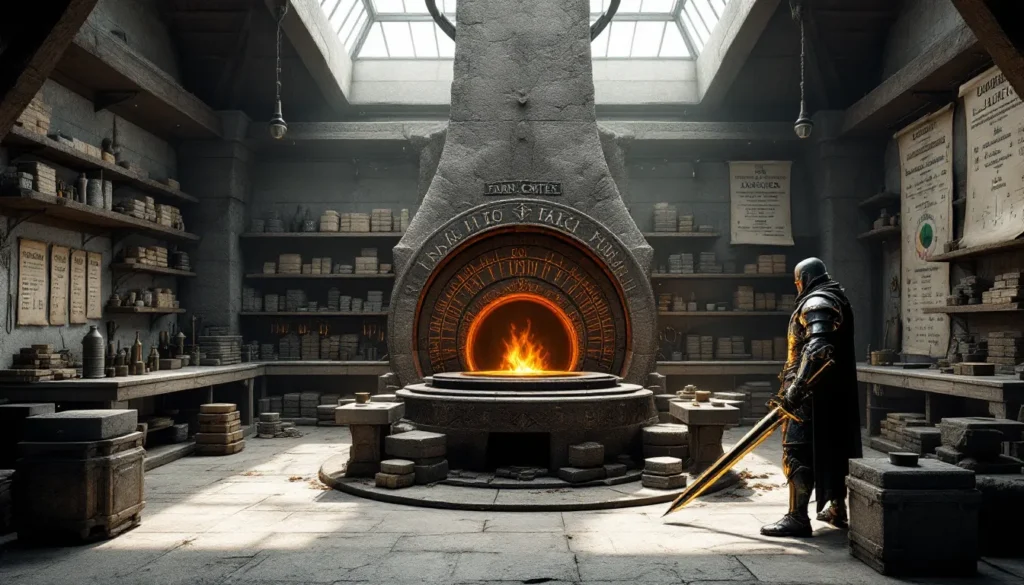
Every major hold contains a forge, usually adjacent to the blacksmith shop. Whiterun (outside the Drunken Huntsman), Markarth (near the city center), and Solitude (Dohvakiin Armory) have easily accessible forges. Smaller settlements like Morthal’s Dawnstar and Kynesgrove have communal forges in their main areas.
Forges are marked as Forge (smithing stations) or Smelter (ore conversion) on your map once discovered. You don’t need ownership, any NPC forge is free to use. But, fast-traveling to Whiterun and heading straight to the smithy is optimal for grinding because it’s central and least likely to be interrupted by combat encounters.
Set up your first crafting session with these prerequisites:
- Ensure inventory space. You’ll craft multiple items to gain XP.
- Stock ore or ingots. 10-20 ingots is enough for first attempts.
- Open the forge menu. Approach the smithing station and interact.
- Navigate to your desired recipe. The menu organizes by armor type (weapons, helmets, cuirasses, boots, gauntlets, shields).
If a recipe appears grayed out, you’re missing either the required Smithing level or necessary perks. Greyed recipes still show material costs, use this to plan your level-up path.
Selecting Recipes and Gathering Components
Choose your first craft based on availability and purpose. Iron Dagger is the canonical starter because it requires only 1 Iron Ingot and 1 Leather Strip, both abundant. Crafting 20 Iron Daggers levels Smithing by approximately 3-4 points and takes under five minutes.
Once you hit Smithing 10-15, transition to Iron Armor pieces. A full set (cuirass, boots, gauntlets, helmet, shield) consumes roughly 50 Iron Ingots but grants 15-20 Smithing levels. This is mandatory progression because wearing your crafted gear and improving it with Tempering (handled at grindstones) makes them viable for actual combat.
Component gathering requires planning:
- Iron weapons/armor: Forage Iron Ore at Halted Stream Camp (respawns every 48 in-game hours), then smelt at the nearest forge.
- Leather components: Loot from bandits, or purchase from leather merchants like Elrindar at the Drunken Huntsman (Whiterun) for 1 gold each.
- Heating it up: Higher-tier materials require materials in combination. Steel Armor needs Steel Ingots (smelted from Steel Ore) and Iron Ingots in specific ratios (e.g., Steel Cuirass costs 4 Steel Ingots + 1 Iron Ingot).
Read each recipe’s requirements before gathering. Attempting to craft Elven Gauntlets without Mithril Ingots wastes time. The forge menu displays all component costs upfront, verify you have sufficient quantities before confirming the craft.
Once crafted, your new gear spawns in your inventory at base stats. Head to a Grindstone to apply improvements, or earn those improvements through combat and repeated tempering.
Mastering Advanced Forge Techniques
Creating Legendary and Unique Weapons
Legendary status is applied post-crafting through enchanting. Once you reach level 50 Enchanting with the Enchanter perk, you unlock the ability to apply multiple enchantments to a single weapon. A Legendary Daedric Greatsword crafted at Smithing 100 + perked, then enchanted with Chaos Damage (applies fire/frost/shock randomly) and Absorb Health on the second slot becomes a top-tier damage dealer.
The path to Legendary weapons requires synergy:
- Craft base weapon at maximum Smithing level.
- Apply Tempering at a grindstone to max its damage (requires two of the base ingredient).
- Enchant with preferred effects (Enchanting 50+ required for meaningful power).
- Apply a second enchantment if you’ve invested in Enchanting perks.
Unique weapons (Daedric, Dragonbone, Ebony Plate) aren’t inherently stronger than perked Daedric gear: the distinction is thematic and availability. Ebony Plate Armor is visually distinct (bulkier silhouette than standard Ebony) and requires no dragon slaying, making it optionally faster to achieve.
Deadric Plate (a different material from Daedric) crafts into heavier, more imposing armor. It requires Daedric Smithing + 50 Smithing perks focused on heavy armor, consuming more Daedric Ingots than standard Daedric recipes. The investment is purely aesthetic unless you’re min-maxing armor weight ratios.
Optimal Smithing Perks and Skill Trees
Smithing perk trees follow a linear progression, but your build determines priorities:
Essential perks (mandatory):
- Steel Smithing (20 Smithing): +25% damage to Steel gear. Early investment pays dividends.
- Elven Smithing (30 Smithing): Unlocks Elven tier and grants +25% damage.
- Advanced Armors (50 Smithing): Unlocks Glass, Scaled, and Sapphire, plus +25% scaling.
- Daedric Smithing (90 Smithing): Unlocks Daedric crafting with +25% damage multiplier.
- Arcane Smithing (60 Smithing): Allows crafting of enchanted gear from scratch (critical for legendary weapons).
Specialized perks (build-dependent):
- Heavy Armor Smithing (50 Smithing): If you’re using heavy armor, this perk grants +50% damage scaling for Daedric/Dragon gear specifically. Massive for tank builds.
- Light Armor Smithing (50 Smithing): +50% scaling for Glass/Scaled gear. Essential if you’re a sneaky archer or mobile caster.
- Ebony Smithing (80 Smithing): Unlocks Ebony with +25% damage. Don’t skip this on your way to Daedric.
Luxury perks (diminishing returns):
- Elven Plate Smithing: Crafts bulkier Elven armor. Niche use.
- Orcish Plate Smithing: Similar niche value.
Your path should be: Steel Smithing → Elven Smithing → Advanced Armors → Arcane Smithing → Daedric Smithing. This sequence unlocks endgame crafting by level 90 and ensures you never encounter locked recipes during progression.
Alternatively, beeline toward Heavy Armor Smithing if you’re tanking, or Light Armor Smithing if you’re dodging. Both grant +50% damage at level 50, beating the +25% of mid-tier perks.
Combining Forging with Enchanting for Maximum Power
Best Enchantments for Forged Weapons
Forged weapons + enchantments create exponential power gains. A base Daedric Greatsword (60 base damage) enchanted with Chaos Damage (+20-30 additional damage) reaches 80-90 effective damage output, doubling raw values through enchantment alone.
Top enchantments by playstyle:
Melee DPS:
- Chaos Damage: Procs fire/frost/shock randomly. Highest single-hit scaling.
- Absorb Health: Lifesteal effect. Grants survivability while maintaining aggression.
- Fiery Soul Trap: Combines fire damage + soul trapping, ideal for recharging enchantments midway.
Ranged (Bows):
- Paralyze: Locks targets in place for 2-3 seconds. Unmatched crowd control.
- Lingering Damage Health: DOT effect: stacks if you land multiple arrows.
- Soul Trap: Harvests souls for recharging: infinite ammo sustainability.
Armor (Defensive):
- Fortify Health: Direct HP boost. Numbers vary by Enchanting skill.
- Fortify Stamina: Critical for heavy armor users burning stamina on power attacks.
- Resist Frost/Fire/Shock: Reduces respective damage by 25-50%. Essential in enemy-specific dungeons.
A forged set combining multiple these becomes unkillable at mid-levels. Imagine a Daedric Cuirass with Fortify Health and a Daedric Helmet with Fortify Stamina, you’re stacking utility without sacrificing offensive power.
Leveling Both Crafting Skills Efficiently
Smithing and Enchanting level differently, requiring separate strategies:
Smithing fast-track:
- Farm Iron Ore at Halted Stream Camp (five nodes respawn bi-monthly).
- Smelt into Iron Ingots (grants Smithing XP).
- Craft Iron Daggers in bulk (20-30 at a session).
- Repeat until Smithing 20, then transition to Steel.
This loop grants 1 XP per craft but diminishes at higher levels. At Smithing 50+, grinding identical recipes yields near-zero returns. Switch to crafting new armor types (Elven Gauntlets, Dwarven Armor) to maintain XP scaling.
Enchanting fast-track:
- Loot or craft low-value gems (flawless diamonds, sapphires).
- Enchant iron/leather gear with those gems (grants Enchanting XP).
- Sell enchanted gear to merchants for 2-5x base value.
- Repeat with higher-tier enchantments as Enchanting levels.
Enchanting scales faster than Smithing at lower levels (1 XP per enchant), but harder ores slow Smithing around level 50-80. Bridge this gap by crafting high-value items (Daedric gear sells for 1,000+ gold enchanted) and enchanting them immediately.
Synergy trick: Combine both skills into one loop.
- Craft Daedric gear at the forge (Smithing XP).
- Walk to an enchanting table.
- Apply enchantments (Enchanting XP).
- Sell the finished legendary item (wealth + character progression).
This single loop grants XP in both trees simultaneously. You’ll hit Smithing 100 and Enchanting 100 within 15-20 hours of focused grinding, enabling powerful enchantment construction for exponential enchantment scaling on endgame gear.
Pro Tips for Efficient Forging and Resource Management
Farming High-Value Crafting Materials
Ore respawn mechanics: Ore deposits respawn every 48 in-game hours (two days) if you’ve been gone for that duration. Halted Stream Camp has five Iron Ore nodes, clearing them, waiting 48+ hours, and returning duplicates your resource chain indefinitely.
Power-farming Iron: Fast-travel to Halted Stream Camp, mine five nodes (takes 60 seconds), craft 20 Iron Daggers at the nearby forge, save, and reload your save. Crafting before the reload prevents ore from despawning. Repeat this 2-3x daily for passive Smithing progression.
Leather Scraps farming: Bandits carry them, but purchasing from leather merchants is faster. Visit Elbur’s Leather Store (Riften) and purchase 200+ scraps for 200 gold. This bootstraps your Daedric crafting instantly.
Ebony Ore sources: Beyond Gloombound Mine, the Thalmorlair (during the Dark Brotherhood questline) contains chests with 2-3 Ebony Ingots. Completing related quests (like “No One Escapes Cidhna Mine”) awards ingots directly in quest rewards.
Dragon Bone sustainability: You don’t farm this, you raid it. Every slain dragon yields 1-3 Dragon Bones depending on difficulty and perks. Fast-travel to dragon burial mounds (Bleak Falls Barrow, Kynesgrove) and trigger dragons via story progression or shouts. Alternatively, visit dragon priests in dungeons for guaranteed Daedric/Dragonbone loot if you’ve already cleared primary dragons.
Don’t hoard materials excessively. Craft immediately and sell finished goods: inventory space is your limiting resource, not materials (since respawning is infinite). A crafter holding 500 Iron Ingots wastes slots that could carry enchanted weapons worth 2,000 gold each.
Maximizing Profit from Your Forged Goods
Pricing psychology: Vendors have gold pools, Blacksmith NPCs hold 1,000-2,000 gold. Selling a single Daedric Greatsword (1,200 gold) maxes them out. Spread sales across vendors or fast-travel 48+ hours for their gold to respawn.
Enchantment markup: An unenchanted Daedric Cuirass sells for 800 gold. Enchanted with Fortify Health 50, it’s worth 2,500 gold, a 3x multiplier. Enchanting is your profit accelerator. Every 10 points of Enchanting adds roughly 100+ gold to finished-item value.
Leveling your Smithing Perk bonuses: Once you unlock Steel Smithing, your Steel gear sells for +25% more. At Smithing 100 + Daedric Smithing, your Daedric goods sell 25% higher. This stacks with enchantment markup, a Daedric Greatsword (+25% perk bonus) enchanted with Chaos Damage (3x base) becomes a 4x value multiplier from 1,200 base to 4,800 gold.
Fence trading: Join the Thieves Guild and access fence merchants who buy stolen goods and unlimited items (unlike regular vendors capped at 1,000-2,000 gold). Crafting 50 Daedric Daggers and fencing them generates 15,000-20,000 gold in a single transaction, no vendor shopping required.
Transmute Ore spell: Learned from spell tomes scattered in Dwemer ruins, this spell converts Iron Ore → Gold Ore → Silver Ore. Useless for direct Smithing but essential for Jewelry Crafting. Craft 200 Gold Rings (1 Gold Ingot each), enchant with Fortify Unarmed (+20 punch damage), and sell at 100+ gold each, pure profit loop unrelated to weapon Smithing but leveraging the same crafting economy.
Common Forging Mistakes and How to Avoid Them
Grinding identical recipes at high levels: Smithing XP scales inversely with recipe rarity. Crafting your 500th Iron Dagger at Smithing 60 grants zero XP, you’ve hit diminishing returns. Switch to new armor types (Daedric, Dragon, Ebony Plate) every 10-15 levels to maintain XP gain. Verify you’re still earning XP by checking your Smithing level before/after a craft.
Ignoring tempering: A crafted weapon at base stats underperforms significantly. A Daedric Greatsword untempered deals 52 base damage: tempered, it’s 60+. Tempering costs two base ingredients (2 Daedric Ingots in this case) and takes five seconds. Always temper high-value items before enchanting, tempering adds damage before enchantment multipliers apply, maximizing output.
Over-investing in niche perks: Elven Plate Smithing and Orcish Plate Smithing are flavor perks. They gate cosmetic armor types with zero mechanical advantage over standard Elven/Orcish gear. Prioritize Steel/Elven/Daedric Smithing and Heavy/Light Armor Smithing instead. Save perk points for Enchanting or combat skills.
Not investing in supporting perks: Perk 5 Heavy Armor Smithing requires 50 Smithing and 50 investment in the Heavy Armor skill tree separately. Many players sink 50 Smithing points but never unlock the perk because they didn’t level Heavy Armor to 50. Plan your multiclass requirements upfront.
Selling crafted gear too early: A Steel Cuirass at Smithing 20 sells for 40 gold. The same recipe at Smithing 40 (with perks) sells for 150+ gold. Delaying sales by 10-15 levels multiplies your profits significantly. Hoard crafted goods in a safe container (your player house) until you’ve leveled sufficiently.
Forgetting to loot Smithing supplies from dungeons: Most Nordic dungeons contain Iron Ingots, Steel Ingots, and Leather Scraps in barrels and chests. Looting during exploration eliminates farming tedium. You’ll passively accumulate 1,000+ Iron Ingots through normal play without dedicated farming.
Crafting gear beyond your current armor rating: A heavy armor user in Daedric plate at Smithing 25 is absurd, you lack the Daedric Smithing perk, so the crafted piece underperforms by 25-30%. Wait until you have the associated perk (Smithing 90) before crafting Daedric. Similarly, don’t craft Glass gear if you’re not perked in Advanced Armors (50 Smithing).
Hoarding low-value materials: 500 Hide Scraps and 200 Iron Ore take up 100+ inventory slots and sell for pittance. Smelt ore immediately and craft Hide gear into Iron gear via transmutation. Focus inventory on high-value finished goods and key ingredients (Daedric Ingots, Dragon Bone).
Neglecting enchanted gear crafting: Once you unlock Arcane Smithing (60 Smithing + 60 Enchanting), craft enchanted gear directly from the forge. A Daedric Cuirass with Fortify Health crafted at the forge is nearly identical to crafting the cuirass, then enchanting separately, but it grants XP in both skills simultaneously and guarantees enchantments match your intent. This is the single most efficient Smithing/Enchanting loop in the game, and many players never discover it.
Consult gaming guides and gaming news sites when you’re unsure about mechanic interactions, community wikis have detailed perk breakdowns that prevent costly build mistakes.
Conclusion
Mastering Skyrim’s forge is a marathon, not a sprint. You’ll start with Iron Daggers and vanilla leather armor, but by Smithing 100, you’re crafting Legendary Daedric weapons that rival or exceed any loot the world throws at you. The path requires discipline, farming ore, navigating perk trees, synergizing with enchanting, but the payoff is a character whose gear is perfectly tailored to their playstyle.
The forge isn’t a chore. It’s your path to true power. Whether you’re optimizing for damage, survival, or raw profit, understanding ore respawn cycles, perk progression, and enchantment stacking separates casual players from ones who dominate Skyrim’s hardest content. Start grinding Iron today, and by next week, you’ll be forging legendary weapons that carry you through Dragonslayer builds and endgame challenges.
Your forge awaits. Get smelting.