Table of Contents
ToggleFalkreath isn’t the flashiest hold in Skyrim, but it’s one of the most rewarding to explore. Tucked away in the southeastern corner of the province, this forested region offers everything from hidden dungeons and valuable crafting materials to some of the game’s most interesting questlines. Whether you’re looking to build a home, hunt for rare loot, or uncover the secrets of its shadowy inhabitants, Falkreath has something waiting. This guide breaks down everything you need to know about the hold, from the politics of its leadership to the best leveling opportunities and the legendary Lakeview Manor.
Key Takeaways
- Falkreath’s strategic location in southeastern Skyrim, with dense forests and trade routes, makes it a defensible hold with strong economic leverage and rich resources for gathering and crafting.
- Lakeview Manor is the premier player home in Falkreath, offering complete customization across three building zones and serving as an ideal base for long-term crafting and storage operations.
- The region is a paradise for alchemy builds, with abundant mushrooms, mountain flowers, and rare ingredients that generate high-profit potions when crafted and sold to local merchants like Nenya.
- Falkreath’s diverse dungeon encounters—featuring draugr, vampires, and dragons—provide excellent combat training and leveling opportunities for mid-to-high level characters seeking sustained progression.
- Complex side quests and faction missions in Falkreath, particularly through the Dark Brotherhood and character-driven narratives like Runil’s arc, offer moral depth and memorable storytelling beyond typical radiant quests.
- The hold rewards patient exploration with a self-contained economy and identity that functions independently from Skyrim’s larger political conflicts, making it ideal for players establishing a true home base.
Understanding Falkreath Hold
Geography and Strategic Location
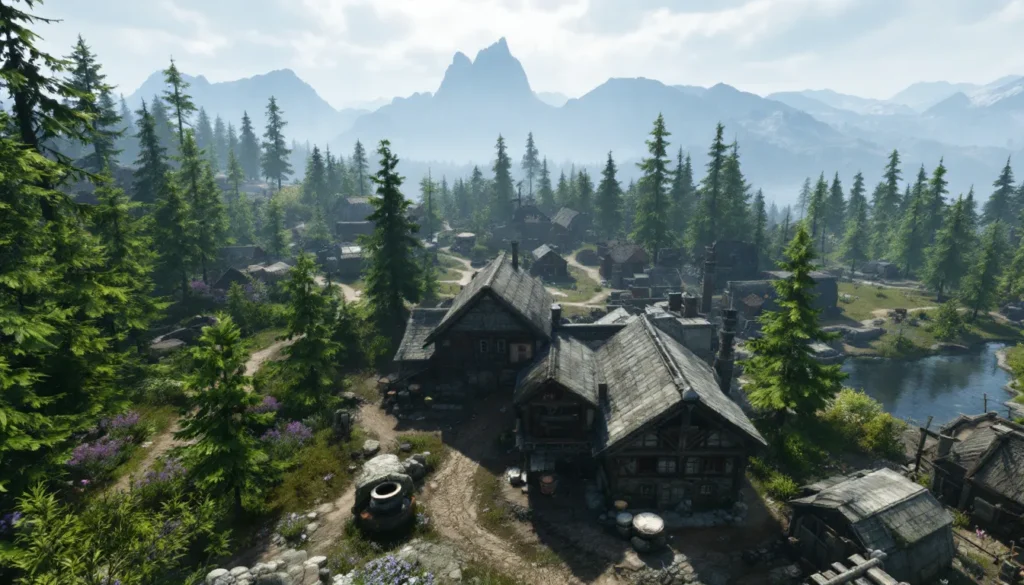
Falkreath Hold occupies the southeastern portion of Skyrim, serving as a critical border region between the province and Cyrodiil. The hold’s strategic position has made it historically significant, it controls important trade routes and serves as a buffer zone during times of conflict. The landscape is heavily forested with dense pine and fir trees, creating natural chokepoints for travel and warfare. Most major roads funnel through the town of Falkreath itself, making it a natural hub for commerce even though its relatively small population.
The hold’s geography creates natural defensive advantages. The thick forests provide cover, while the mountainous terrain to the east limits invasion routes. This is why the Jarls of Falkreath have always maintained relatively independent positions, they’ve got defensible terrain and economic leverage through the trade routes. If you’re exploring on foot, expect constant elevation changes and winding paths. The terrain is authentic to the Skyrim experience: challenging but navigable, with plenty of opportunities to stumble into unexpected encounters.
Climate, Flora, and Natural Resources
Falkreath experiences a temperate climate compared to Skyrim’s harsher northern regions. Winters are cold but not as brutally extreme as the Pale or Winterhold. This makes the hold somewhat more hospitable for agriculture and permanent settlements, which directly influences the economy and why it’s been developed as one of Skyrim’s more stable communities.
The hold is a gatherer’s paradise. The dense forests are rich with mushrooms, including Imp Stool, Luminous Russula, and Violet Pudding Cap. Blue and purple mountain flowers flourish on the hillsides, while Canis Root and Thistle Branch are abundant near swampy areas. If you’re running an alchemy build, Falkreath is one of the best regions in Skyrim for material gathering. The forested areas also support populations of bears, deer, and wolves, making hunting a viable economic activity.
The region also produces high-quality lumber. The Falkreath lumber mill processes timber for both construction and trade, which feeds into the local economy and is a reason the hold remains prosperous even though its remote location. Raw firewood and processed lumber are constants in the trade goods moving through the region.
Falkreath Town Overview
Key Locations and Points of Interest
The town of Falkreath is compact but densely packed with services. The Jarl’s Longhouse serves as the administrative center and is where you’ll find Jarl Siddgeir (or Dengeir of Stuhn in alternate outcomes). This isn’t the most impressive longhouse in Skyrim, but it’s functional and historically significant due to the political intrigue surrounding Falkreath’s leadership.
The Drunken Flagon is the primary tavern and inn, run by Greta. This is where most of the town’s social activity happens, and it’s a reliable spot to pick up rumors, hire mercenaries, or rest if you’re without a home. The tavern features a small balcony and upper rooms for lodging, nothing fancy, but it gets the job done.
For commerce, the Falkreath General Goods Store and the Bannered Mare (though technically located in Whiterun’s territory, it has connections to Falkreath trade) serve as primary markets. Local merchants stock standard supplies, ingredients, and weapons. The Blacksmith’s Forge at the edge of town is essential if you need gear repaired or want to purchase steel equipment.
The Temple of Arkay is a small but significant religious structure where the priest, Runil, provides healing services and the Restoration skill trainer. If you’re dumping points into Restoration, this is your go-to location. The temple also handles the town’s burial rites, and several side quests involve interactions here.
The Lumber Mill operates on the western edge of town. While it doesn’t offer interactive content beyond quest material, it’s a visual landmark and economic anchor for the region.
Notable NPCs and Faction Leaders
Falkreath’s political landscape centers on Jarl Siddgeir, a young, somewhat arrogant leader who inherited his position. Siddgeir is the default Jarl, and his leadership shapes much of the hold’s character, for better or worse, depending on your perspective. He’s notably less impressive than other Jarls in Skyrim and is susceptible to manipulation, which factors into several quest outcomes.
Alternatively, Dengeir of Stuhn can become Jarl through Civil War questlines or specific interventions. Dengeir is the former Jarl, elderly but with more dignity and military experience. His potential return as Jarl represents a different political trajectory for the hold.
Runil, the priest of Arkay, is one of Falkreath’s most interesting NPCs. He’s a Nord who converted to the priesthood and carries deep guilt over his past as a mercenary. His dialogue and questlines hint at moral complexity rarely seen in smaller towns. He’s worth talking to.
Greta, the tavern keeper, serves as the social hub of Falkreath. She’s a Breton and knows everyone’s business. If you’re seeking information about local rumors or political winds, Greta’s your source.
Nenya, the alchemist and herbalist, operates her apothecary and is a critical resource if you’re focused on alchemy. She stocks rare ingredients and pays decent prices for foraged materials. Building a good relationship with Nenya is worthwhile if you’re gathering for crafting.
The Namira cult also operates in Falkreath’s shadows, which plays into darker storylines and leads to some genuinely unsettling encounters in the region.
Quests and Storylines in Falkreath
Main Quest Connections
Falkreath’s connection to the main quest is moderate but significant. The hold factors into the Civil War questlines, depending on which faction you join, Falkreath becomes either a strategic military objective or a defended stronghold. The political leadership of Falkreath can shift dramatically based on your actions during the Civil War, giving the region real stakes.
If you side with the Stormcloaks, Falkreath represents a key position near the Cyrodiil border. The Imperials view it similarly. This means the hold hosts some of the Civil War’s pivotal moments, and the outcome directly affects which Jarl rules afterward and what resources become available to the winner’s faction.
Falkreath also appears in the broader narrative through environmental storytelling. The tensions between the Jarl and his court, the presence of Daedric cults, and the general unease in the hold hint at deeper stories worth exploring.
Side Quests and Radiant Missions
Falkreath is packed with side quests that rarely feel generic. “A Sorrow of Sorrow” (or similar questlines involving the “Sorrow” location) weaves together alchemy, mystery, and betrayal. These quests often emerge organically from conversations with locals and frequently involve moral choices rather than simple combat encounters.
Runil’s questline is particularly memorable. Speaking with him about his past unlocks one of the game’s more morally complex narratives. Without spoiling it, his arc involves redemption, guilt, and the consequences of past actions, themes that resonate more than typical radiant quests.
Sheogorath’s Shrine quests and related Daedric encounters occur near Falkreath and pull you into the chaotic machinations of Skyrim’s more unpredictable god-spirits. These quests reward exploration and curiosity.
Radiant missions from the Jarl or local residents frequently send you into nearby dungeons or to settle disputes between townspeople. While mechanically similar to radiant quests elsewhere, Falkreath’s version feels more grounded in the town’s specific politics and conflicts.
Faction-Specific Quests
The Thieves’ Guild has operations in Falkreath, and guild-affiliated quests send you here regularly. The town’s size makes it a prime target for guild activities, and the quests often feel more personal since you’re working against specific NPCs with established relationships.
The Dark Brotherhood maintains a presence in Falkreath through the Sanctuary location south of town. These questlines are among the guild’s most consequential narratives. Contracts targeting Falkreath residents pull you into the town’s darker politics and force choices about who lives and dies.
The Dawnguard questline has connections to Falkreath, particularly if you’re hunting vampires or investigating Daedric activity. The hold’s remote location makes it a natural staging ground for vampire investigations.
Unless you’re actively pursuing faction quests, you might miss these connections, but they’re valuable if you want to experience Falkreath’s full story potential.
Dungeons, Caves, and Exploration
Notable Dungeons Near Falkreath
Falkreath is surrounded by some of Skyrim’s best dungeon content. Bleak Falls Barrow is technically in the Whiterun hold but is geographically closest to Falkreath if you’re exploring the border regions. It’s the game’s first major dungeon and remains relevant throughout playthroughs for its resources and lore.
Bloodlet Throne is a vampire lair directly south of Falkreath and serves as the primary Dark Brotherhood location for the hold. It’s a mid-to-late game dungeon with challenging vampire encounters and is worth revisiting if you’re invested in the Dark Brotherhood’s Falkreath storylines.
Broken Fang Cave sits to the west and is home to a powerful frost dragon and associated draugr. If you’re a mid-level character, expect a genuine challenge here. The cave also contains valuable loot and dragon bones if you’re gathering crafting materials.
Shriekwind Bastion is a vampire-filled cave system to the east that serves as a den for vampire clans. The dungeon’s layout is complex, rewards exploration, and features some of the game’s most dangerous vampire encounters. High-level players find genuine threats here.
Helgen Keep is partially collapsed and accessible from Falkreath’s border. It ties directly to the opening sequence and serves as a reliable source of iron gear, crossbows, and other standard equipment.
You can explore the Skyrim Dungeons: Uncover Secrets, Solve Puzzles, and Conquer Epic Challenges guide for detailed walkthroughs of these locations and others in the region.
Loot, Enemies, and Difficulty Levels
Falkreath’s dungeons feature a mix of draugr, vampires, and dangerous creatures depending on the specific location. Draugr are the most common enemy type in most dungeons, with difficulty scaling from basic draugr to deathlords depending on dungeon level and your current character level. Bring Fiery Soul Trap or equivalent enchanted weapons if you’re planning to spend time here, as draugr have high magic resistance.
Vampires in the Falkreath area are genuinely dangerous, especially higher-level variants like Vampire Lords. They drain health, cast paralyzing spells, and have high magic resistance. If you’re not prepared with fire damage, antimagic items, or sufficient health restoration, you’ll struggle. The payoff is worth it, vampire corpses often carry valuable potions, jewelry, and gems.
Loot from Falkreath dungeons leans toward iron and steel equipment with occasional ebony drops from higher-level locations. Skyrim Falkreath dungeons rarely yield legendary gear, but they’re reliable for steady progression loot and crafting materials. Dragon bones and scales drop from dragon encounters, making Broken Fang Cave particularly valuable if you’re leveling Smithing or crafting dragon armor.
Difficulty scaling in Falkreath dungeons is moderate. Most are designed for mid-level characters (15-25), though some vampire locations push higher. If you’re a low-level character, focus on Helgen Keep and the outer areas of larger dungeons. If you’re endgame, Shriekwind Bastion and Bloodlet Throne provide meaningful encounters.
Expect environmental hazards as well. Some caves feature Spike Traps, Pressure Plates, and Falling Sections. Read the environment carefully and save frequently, especially in complex layouts.
Homeownership and Settlement Opportunities
Lakeview Manor and Player Housing Options
Lakeview Manor is the crown jewel of Falkreath homeownership and one of the best player homes in Skyrim. Located west of the town on a scenic lake, this property offers space, privacy, and creative customization. Unlike purchased homes in towns, Lakeview Manor is built from scratch on raw land, giving you complete control over its development.
The property comes with three building areas: the main house, a tower, and a alchemy/enchanting workshop area. You can develop each section independently or pursue them all simultaneously. The main house starts as a foundation and frame: you add walls, flooring, and furniture piece by piece. This gradual construction creates a genuine sense of ownership and progression, you’re literally building your home stone by stone.
Lakeview Manor requires the Hearthfire DLC. If you don’t have it, the property isn’t available, but the base game still offers housing in town. The Jarl’s Longhouse offers lodging if you’re not interested in permanent housing.
Building and Customization Tips
If you’re building Lakeview Manor, plan your layout before investing heavily. The three building zones are fixed, so decide whether you want the main house expanded or balanced across all three areas. Most players prioritize the main house for living quarters, then add the tower for storage/display, and the workshop for crafting.
Essential additions: Start with basic building materials (logs, sawn logs, clay, stone, etc.) sourced from the lumber mill or crafted from raw materials. The Storage Area in the main house is critical, inventory management becomes easier with dedicated storage. Add Weapon Racks and Display Cases if you’re a collector.
For the Alchemy/Enchanting Workshop, invest in an alchemy lab and arcane enchanter. This creates a powerful crafting hub without needing to leave your property. If you’re focused on specific skills, having dedicated crafting space at home dramatically increases efficiency.
Decorative elements are personal preference, but furnishing your home makes the space feel lived-in. Adding a Bedroom, Table, and Seating transforms it from functional to homey. The psychological reward of having a true “home base” in the game shouldn’t be underestimated.
Child and Spouse options: If you’ve married or adopted children, they’ll move into Lakeview Manor. This doesn’t affect gameplay but adds narrative depth. Having family in your custom home creates additional motivation to maintain and upgrade it.
Resource gathering for construction is time-intensive. The Falkreath lumber mill provides sawn logs, but you’ll need significant quantities. Plan multiple trips or farm raw logs from nearby trees and mill them yourself. Stone comes from quarries, there’s one accessible from Falkreath. Clay is gathered from clay deposits scattered throughout the region.
Budget for costs. Building Lakeview Manor fully (all three structures fully furnished) requires thousands of gold and hundreds of crafting materials. This isn’t a short-term project: it’s a long-term investment in comfort and utility. The payoff is a genuinely unique player home that reflects your priorities and playstyle.
Combat and Leveling Opportunities
Enemy Types and Combat Encounters
Falkreath’s encounter design ranges from straightforward to punishing depending on where you explore. Draugr are the baseline enemy type across most dungeons, with variants including Draugr Wights, Draugr Reavers, and the rare Draugr Deathlord. Draugr employ straightforward melee combat and occasionally shout attacks. Their unrelenting force shout can be dangerous in tight spaces, use obstacles to break LoS (line of sight) if you’re being pushed around.
Vampires represent the hold’s supernatural threat. Unlike draugr, vampires use ranged spellcasting, movement abilities, and health-drain attacks. They can turn invisible, summon creatures, and cast paralysis. Fighting vampires effectively requires preparation, load up on fire damage, bring cure disease potions, and maintain distance if you’re using melee. Vampire Lords are endgame threats that demand respect: don’t assume you can solo one without proper gear and levels.
Wildlife encounters are consistent throughout the region. Wolves, bears, and sabre cats patrol the forests. These are low-threat individually but dangerous in packs. Bears especially hit hard: if you’re low-level, avoid direct engagement and use ranged attacks or magic.
Dragon encounters occur at specific locations like Broken Fang Cave. These are always challenging and require dedicated preparation. Frost dragons are common in Falkreath due to the climate: bring fire damage or magic resistance gear.
Best Training and Leveling Locations
Falkreath is excellent for specific skill training. Restoration leveling happens naturally through priest interactions at the Temple of Arkay, especially if you’re using healing spells in combat. Runil (the priest) provides Restoration training if you approach him correctly.
Alchemy levels quickly in Falkreath due to abundant ingredients. The dense forests provide constant material for potion crafting. Every mushroom picked and ingredient gathered contributes to skill growth. Set up base operations at Lakeview Manor with an alchemy lab, then spend time gathering and crafting. You’ll level Alchemy 5-7 points per crafting session if you’re efficient.
One-Handed and Two-Handed weapon leveling occurs naturally through dungeon clearing. Falkreath’s dungeons are perfect for dedicated grinding because they’re close together and respawn regularly. Bloodlet Throne and Shriekwind Bastion provide consistent vampire encounters for weapon skill training.
Destruction and Restoration magic level through active use in combat. Vampire-heavy locations like Shriekwind Bastion are perfect training grounds because vampires use magic-based attacks, encouraging you to respond with magic. Pair this with crafting potions for maximum returns.
Illusion and Conjuration training occurs through the Dark Brotherhood questlines if you’re working with Falkreath’s Sanctuary. These skills develop faster in complex dungeons with multiple enemy groups.
For pure efficiency, rotate between three activities: dungeon clearing for combat skills (30-40 minutes), ingredient gathering for Alchemy (20-30 minutes), and potion crafting at your property (15-20 minutes). This balanced approach levels multiple skills simultaneously without becoming tedious.
Crafting, Resources, and Economy
Alchemy and Harvesting Materials
Falkreath’s alchemy potential is unmatched in Skyrim. The hold’s flora is diverse and abundant, making it the de facto capital for alchemists. Blue Mountain Flower, Purple Mountain Flower, Imp Stool, and Violet Pudding Cap grow throughout the forests. These high-value ingredients are perfect for beginners learning alchemy because they craft basic potions with decent margins.
Advanced ingredients include Namira’s Rot, Bog Beacon, and Swamp Fungal Pod found in wetter areas near the lakes and marshes. These craft into specialized potions targeting specific needs, paralysis resistance, disease cures, and invisible potions.
Harvesting strategy: Establish a routine path through Falkreath that circles known ingredient locations. The region southwest of the town near the marshes is particularly rich. Bring empty bottles and harvest everything. With high Alchemy skill, you’ll craft potions worth 50-200+ gold each from basic ingredients. This transforms foraging into genuine income.
Selling to Nenya (the local herbalist) gets you fair prices for raw ingredients, but crafting potions first increases profit. A Paralysis Potion crafted from cheap ingredients sells for 300+ gold: raw ingredients might net 50 gold total. The crafting step multiplies your income.
If you’re pursuing Skyrim Falkreath as a base, dedicate time to alchemy. It’s low-risk, high-reward, and feeds into your overall progression. Plus, having a steady supply of potions keeps you combat-ready without constant town visits.
Trading and Commerce in Falkreath
Falkreath’s economy is stable and merchant-friendly. The Falkreath General Goods Store operates standard business hours and stocks reasonable supplies. Prices are middle-of-the-road: you won’t get gouged, but you won’t find massive discounts either.
The Blacksmith deals in weapons, armor, and crafting materials. This is where you sell excess crafted weapons and damaged gear for repairs. The blacksmith’s stock rotates with dungeon drops, so check back regularly for newly available equipment.
Nenya’s apothecary is the primary marketplace for alchemy goods. She pays competitive rates for ingredients and finished potions. Building your reputation with her through regular sales improves prices slightly. If you’re running an alchemy-focused playthrough, Nenya becomes your primary income source.
The Drunken Flagon tavern functions as a social hub where rumors turn into quests. Some quests directly pay coin: others provide crafting materials or equipment worth selling. Greta sometimes offers contracts or information about lucrative opportunities.
For serious wealth accumulation, focus on high-value items: enchanted gear from dungeons, potions worth 100+ gold, and crafted weapons from Smithing. Falkreath provides the crafting infrastructure (Lakeview Manor) and resource abundance to support this economy. An efficient Falkreath-based operation can generate 5,000+ gold per hour once established.
You might also check broader Skyrim Archives for additional trading and commerce insights that apply region-wide. Also, gaming communities like Twinfinite publish guides that cover Skyrim’s economy in depth, which can complement your local Falkreath strategies.
Conclusion
Falkreath Hold rewards the explorers who take time to dig beneath its surface. It’s easy to dismiss it as a quiet, remote region, but that’s exactly the point, the hold thrives because it operates on its own terms, away from the political grandstanding of Solitude or Windhelm.
Your interaction with Falkreath depends on what you want from it. If you’re seeking a permanent home, Lakeview Manor offers customization and privacy unmatched elsewhere. If you’re running an alchemy build, the region’s flora and merchant infrastructure create a sustainable crafting economy. If you’re pursuing dark brotherhood contracts or thief guild work, Falkreath’s isolated nature makes it perfect for clandestine operations. For pure combat and exploration, the surrounding dungeons provide solid encounters and reliable loot.
The hold’s quests, particularly those involving characters like Runil, tackle genuine moral complexity rather than generic fetch tasks. These narratives stick with you because they feel earned, set in a place that feels lived-in even though its small size.
Falkreath isn’t the flashy choice. It won’t make headlines like Markarth’s Dwemer ruins or Whiterun’s political intrigue. But that’s precisely why smart players establish roots here. You can reference strategies from sites like Shacknews and GamesRadar+ for specific mechanical tips, but the real value of Falkreath is discovering its potential yourself through extended play.
Invest time in the hold, and it becomes more than a location, it becomes your base, your refuge, and your real home in Skyrim.